Problem: You Have No Idea What a Replacement Should Actually Cost
Pricing for commercial roofing in Wabash varies more than most owners expect. A 20,000 square foot TPO project quoted by three contractors can come back with a $60,000 spread, and the cheapest bid is rarely the best value. Without a baseline, you cannot tell whether a number is fair or padded.
Solution: Anchor Your Budget to Realistic Local Ranges
Before you collect bids, get a sense of what materials and labor cost per square foot in central Indiana. The numbers below reflect typical Wabash commercial work on existing buildings, including tear off, insulation, membrane, fasteners, flashings, and standard warranty.
For a deeper look at material economics, our breakdown of commercial roofing cost per square foot for 2026 covers how insulation R-values and warranty length push the per foot number up or down.
When you compare bids, look past the headline number and ask what is actually included. A $7.50 TPO bid that uses 45 mil membrane and one inch of polyiso is not the same product as a $9.25 bid using 60 mil membrane, tapered insulation, and walk pads at every rooftop unit. Wabash Commercial Roofing itemizes these line by line so owners in Wabash can see exactly where the dollars go and where a competitor may be cutting corners that show up as leaks in year four.
Problem: The Quoted Timeline Keeps Slipping
Owners hear "two weeks" and plan accordingly. Then rain hits, a delivery is delayed, or the crew finds wet insulation that has to be removed and replaced. Suddenly you are at week four with tenants asking why their parking lot is still full of dumpsters.
Solution: Plan Around a Realistic Window, Not a Best Case
For a typical Wabash commercial project, a useful planning rule looks like this:
- Pre construction (estimate, contract, permits, material order): 3 to 6 weeks.
- on site work for a 20,000 to 40,000 square foot single ply roof: 2 to 4 weeks of active work.
- Weather and inspection buffer: add 25 to 40 percent to the active work window.
Larger metal systems or roofs with heavy mechanical curb work can run 6 to 10 weeks on site. Ask your contractor to write the weather buffer into the schedule so you are not surprised when storms cost you days.
Indiana spring and fall bring rapid weather swings, and adhesive applied systems need surface temperatures and dry conditions that do not always cooperate. A good schedule names which phases are weather sensitive (adhered membrane, sealants, coatings) and which are not (tear off zones with same day dry in, mechanical insulation work). That way, a rainy Tuesday does not stop progress everywhere on the roof.
Problem: The Warranty Looks Strong Until You Read It
Manufacturer warranties on commercial membranes can run 15, 20, or 30 years, but the exclusions matter more than the headline number. Ponding water, missing walk pads, unapproved rooftop equipment changes, and skipped annual inspections can all void coverage.
Solution: Match the Warranty to How You Actually Use the Roof
If your Wabash building has frequent HVAC service, choose a system rated for foot traffic and add walk pads on the documented service paths. If drainage is marginal, invest in tapered insulation now rather than relying on the warranty to cover ponding claims later. Wabash Commercial Roofing registers the warranty in your name, hands you the inspection checklist the manufacturer requires, and schedules the follow up visits so coverage stays intact for the full term.
Problem: Tear-Off Reveals Deck Rot or Hidden Water Damage
This is the most common budget killer. The original quote assumes a sound deck. Once the crew pulls back the membrane, they find soft decking, saturated insulation, or rusted fasteners that were holding things together by habit.
Solution: Get an Honest Pre-Replacement Inspection
A thorough commercial roof inspection before the bid catches most of these issues. Core samples, infrared scans, and a walk of every drain and penetration give you a far better picture than a visual walkover. Build a contingency of 8 to 15 percent of the contract value for deck and insulation replacement found during tear off. If you do not need it, great. If you do, you are not scrambling for funds mid project.
Older Wabash buildings with metal decking, gypsum, or lightweight concrete each have their own failure patterns. Metal decks rust at fastener penetrations and around scuppers. Gypsum softens wherever a seam has leaked for years. Lightweight concrete can hold moisture invisibly long after the surface looks dry. Ask your inspector which deck type you have and what the realistic replacement rate looks like for that material so the contingency number is not a guess.
Problem: An Active Leak Cannot Wait for the Full Replacement
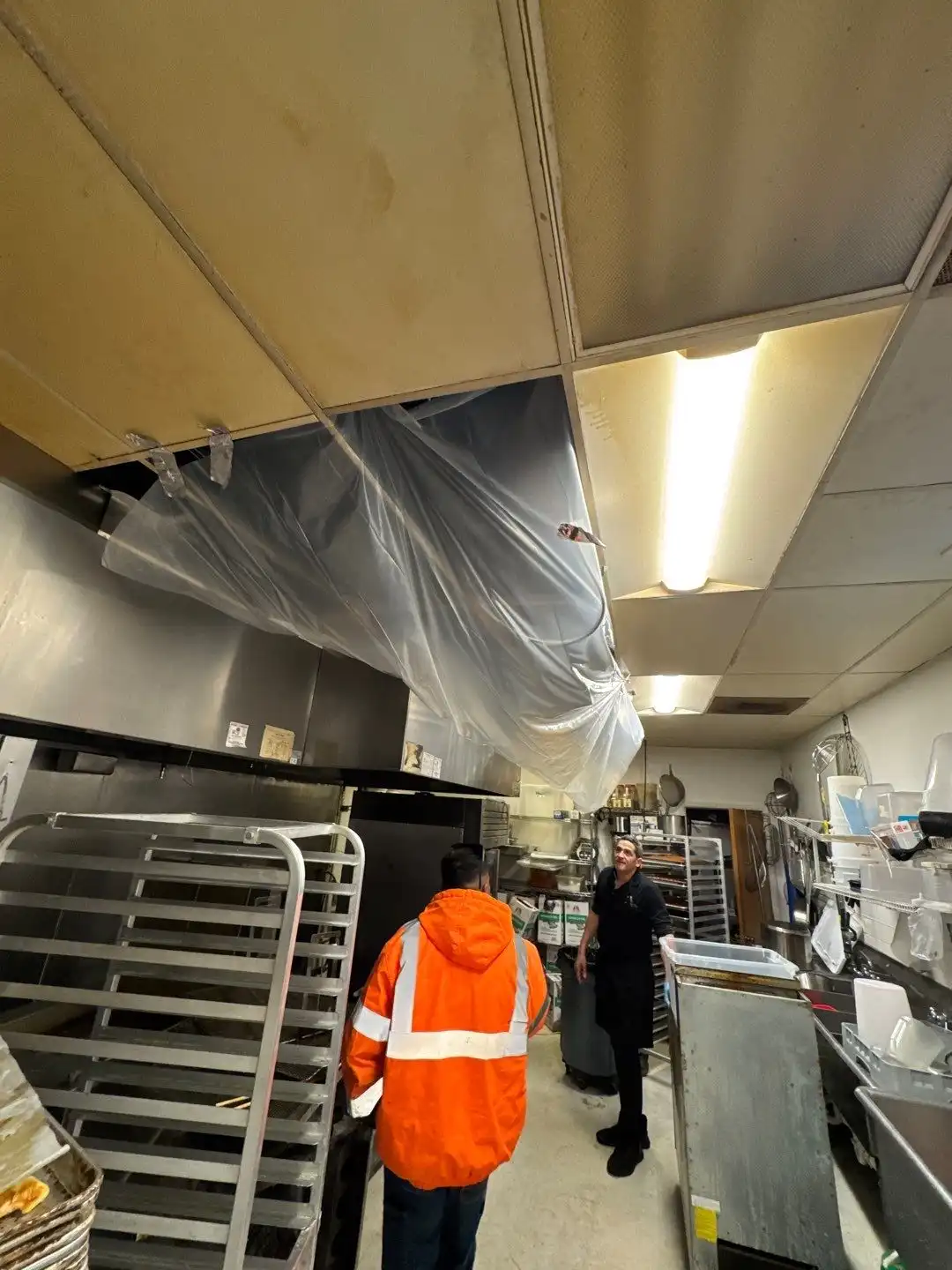
You signed the contract, but the roof is still leaking now, and storms are in the forecast. Interior damage between today and the start date can quietly cost more than the deductible on your policy.
Solution: Stabilize First, Replace on Schedule
We prioritize tarping and dry in on active leaks while the replacement is queued. If interior water has already reached drywall, insulation, or stored inventory, address that immediately rather than waiting. Our team coordinates targeted commercial roof repair with the replacement schedule so you are not paying twice for the same problem.
Problem: Insurance and Operations Pull in Different Directions
Your carrier wants documentation. Your tenants want quiet. Your operations team wants the lot clear by Monday. Without coordination, somebody ends up frustrated.
Solution: Set Expectations in Writing Before Day One
Before mobilization, lock down three things:
- A written scope that matches what the insurance adjuster approved, with photos referenced to specific roof zones.
- A daily work window that respects tenant hours, deliveries, and any noise sensitive operations.
- A staging plan for the dumpster, material lift, and crew parking that does not block your customers.
Most disputes during commercial replacements are about expectations, not workmanship. Spending an hour on these details up front saves days of friction later.